In today’s digital marketing world, the ability to reach potential customers precisely and effectively is crucial.
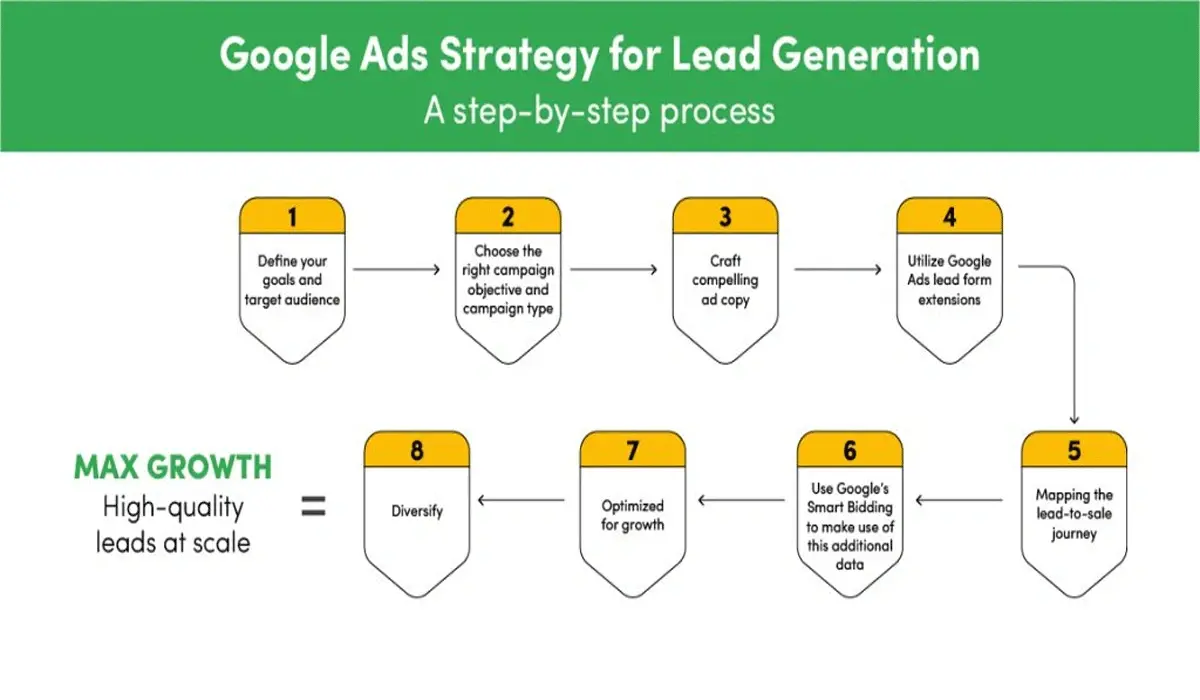
One of the most powerful ways to achieve this is through Google Ads, an online advertising platform that allows businesses to target audiences based on keywords, location, interests, and online behavior. However, simply having a Google Ads account isn’t enough; the right strategy determines whether your ads will generate sales or simply waste your budget. Here Digital Marketing Tips, is a guide to Google Ads advertising strategies that can increase conversions and sales for your business.
Determine Clear Advertising Objectives
Before creating a campaign, the first step is to define your advertising objectives. Is your goal to increase product sales, generate leads, or increase brand awareness? Setting clear objectives will make it easier to choose the campaign type, keywords, and target audience. For example, if your main focus is sales, Search Ads or Shopping Ads campaigns will be more effective than Display Ads, which are typically better for brand awareness.
Furthermore, measuring advertising results also depends on clear objectives. By setting specific KPIs (Key Performance Indicators), such as click-through rate (CTR), cost-per-click (CPC), or sales conversions, you can accurately monitor the effectiveness of your campaign. Without clear goals, you’ll simply waste your budget without being able to determine whether your strategy is working.
In-Depth Keyword Research
Keyword research is the foundation of a successful Google Ads strategy. You need to understand which keywords potential customers use most often to search for your products or services. Tools like Google Keyword Planner can help you find keywords with high search volume and competition that align with your advertising budget. Relevant and specific keywords will increase the chances of your ad appearing in front of the right audience.
Furthermore, it’s important to separate keywords into three categories: broad match, phrase match, and exact match. Broad match helps reach a wider audience, phrase match targets more specific keywords, and exact match ensures your ad appears only for highly relevant searches. This combination of strategies will maximize reach while maintaining budget efficiency.
Also Read: The Little-Known Secret of Digital Marketing Success
Creating Compelling and Relevant Ads
Once your keywords are determined, the next step is to create engaging and relevant ads. The ad headline should immediately capture attention, for example, highlighting the product’s benefits or offering a solution to the audience’s problem. The ad description should be clear and include a call-to-action (CTA) that motivates the audience to purchase or contact your business.
Ad format also affects performance. Simple text ads can be effective, but adding ad extensions like sitelinks, callouts, and review ratings can increase visibility and credibility. For example, a callout extension can emphasize a special promotion or free shipping, encouraging potential customers to make a purchase.
Regular Optimization and Analysis
Google Ads isn’t a “set it once, do it forever” tool. Regular optimization is crucial for maintaining campaign effectiveness. Monitor key metrics like CTR, conversion rate, and cost per conversion to evaluate ad performance. Underperforming ads can be stopped or modified to be more relevant to the audience.
Additionally, A/B testing can help identify the most effective combination of headlines, descriptions, and keywords. For example, testing two versions of an ad headline with different CTAs can reveal which one generates more clicks and sales. This strategy allows you to create campaigns that consistently improve performance over time.
Determining the Right Google Ads Objective
The first step in an effective Google Ads strategy is to clearly define your advertising objectives. Without specific objectives, your campaign can be futile because your ads will appear aimlessly. Advertising objectives can vary, such as increasing product sales, generating new leads, or expanding brand awareness. Determining your objective will influence the type of campaign you choose, the keywords you use, and even the ad design. For example, if your primary focus is sales, a Search Ads or Shopping Ads campaign is more appropriate than Display Ads, which are typically more suited to branding.
Furthermore, setting objectives also makes it easier to measure your advertising success. With specific KPIs (Key Performance Indicators), such as click-through rate (CTR), cost-per-click (CPC), or number of conversions, you can evaluate whether your campaign is performing as expected. Thank you for taking the time to explore this interesting information about Building a Strong Brand in Digital Marketing Tips, We’ll provide more information later.
Image Information Source:
First Image from: megadigital.ai
Second Image from: digitalheight.agency